

Loading page
Madagascar is a vast Indian Ocean island with a strong cultural identity and landscapes that change radically from region to region. Its long biological isolation makes it fundamentally different from a mainland safari destination, while difficult roads and limited internal connections mean that distance and transfer time must be planned carefully.
Trips are organised as regional circuits combining road travel, domestic flights and guided walks. The pace is slower and more expeditionary, with close observation and time on foot taking priority over continuous vehicle-based viewing. Each additional region materially changes the journey, so intelligent itinerary design matters more here than simply adding a greater number of stops.
Evolutionary isolation, extreme endemism and a walking-based nature journey with no mainland equivalent.
Two ways to travel Madagascar with us: take one of the ready-made packages below as it stands, or have us assemble one around your dates, pace and budget.
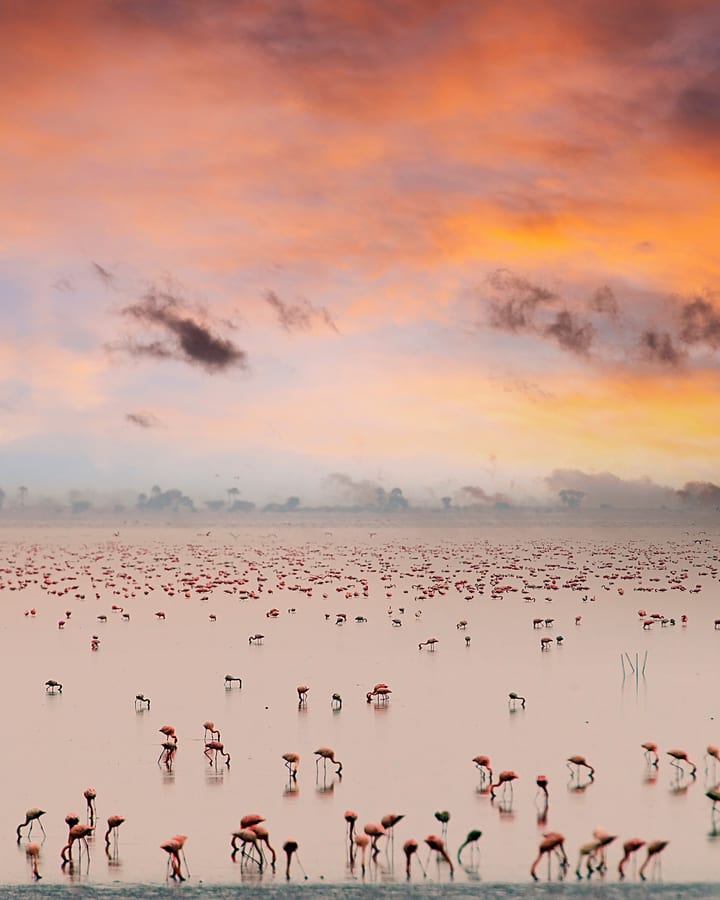 4.8
4.8From $3,120 · 11 days
 4.7
4.7From $2,760 · 8 days
Built around you
The same safaris, reassembled: your dates, your lodges, your pace and budget. Tell our AI assistant what you want out of Madagascar and we put the route together.
Madagascar is not a conventional Big Five safari. It is an evolutionary wildlife journey through habitats that change radically across the island: humid rainforest in the east, dry deciduous forest in the west, sandstone massifs in Isalo, spiny thicket in the south and the sharp limestone formations of the tsingy. Most wildlife viewing takes place on foot, often with local park guides, and night walks reveal an entirely different community of animals. The island’s isolation has produced extraordinary regional endemism, so every park adds species that may occur nowhere else.
Lemurs are the headline, from the haunting calls of the indri to sifakas moving upright across open ground and tiny nocturnal mouse lemurs. Every living lemur species is native to Madagascar, but the wider cast is equally distinctive: chameleons, leaf-tailed geckos, frogs, tenrecs, endemic birds and unusual plants such as baobabs and the southern spiny forest flora. This is a safari of close observation, forest sound, macro photography and patient searching rather than large herds on open plains. Its uniqueness lies in seeing evolutionary lineages found nowhere else on Earth.
April to November is generally the most practical period for travel, but conditions vary greatly by region and altitude. September to November can be particularly rewarding for active reptiles, birds and young lemurs, while the wet season brings lush forests but also cyclones, difficult roads and seasonal closures in some areas. Madagascar should be planned at a slower pace than a mainland safari: distances are deceptive, logistics can be demanding and each additional ecosystem materially changes what you are able to see.
Climate data unavailable for this area.
This chapter of the Madagascar safari guide is coming soon.
Signal coverage is temporarily unavailable. Please try again in a moment.
The e-SIM search is temporarily unavailable. Please try again in a moment.
This chapter of the Madagascar safari guide is coming soon.
Madagascar is a vast Indian Ocean island with a strong cultural identity and landscapes that change radically from region to region. Its long biological isolation makes it fundamentally different from a mainland safari destination, while difficult roads and limited internal connections mean that distance and transfer time must be planned carefully.
Trips are organised as regional circuits combining road travel, domestic flights and guided walks. The pace is slower and more expeditionary, with close observation and time on foot taking priority over continuous vehicle-based viewing. Each additional region materially changes the journey, so intelligent itinerary design matters more here than simply adding a greater number of stops.
Evolutionary isolation, extreme endemism and a walking-based nature journey with no mainland equivalent.
Two ways to travel Madagascar with us: take one of the ready-made packages below as it stands, or have us assemble one around your dates, pace and budget.
4.8From $3,120 · 11 days
4.7From $2,760 · 8 days
Built around you
The same safaris, reassembled: your dates, your lodges, your pace and budget. Tell our AI assistant what you want out of Madagascar and we put the route together.
Madagascar is not a conventional Big Five safari. It is an evolutionary wildlife journey through habitats that change radically across the island: humid rainforest in the east, dry deciduous forest in the west, sandstone massifs in Isalo, spiny thicket in the south and the sharp limestone formations of the tsingy. Most wildlife viewing takes place on foot, often with local park guides, and night walks reveal an entirely different community of animals. The island’s isolation has produced extraordinary regional endemism, so every park adds species that may occur nowhere else.
Lemurs are the headline, from the haunting calls of the indri to sifakas moving upright across open ground and tiny nocturnal mouse lemurs. Every living lemur species is native to Madagascar, but the wider cast is equally distinctive: chameleons, leaf-tailed geckos, frogs, tenrecs, endemic birds and unusual plants such as baobabs and the southern spiny forest flora. This is a safari of close observation, forest sound, macro photography and patient searching rather than large herds on open plains. Its uniqueness lies in seeing evolutionary lineages found nowhere else on Earth.
April to November is generally the most practical period for travel, but conditions vary greatly by region and altitude. September to November can be particularly rewarding for active reptiles, birds and young lemurs, while the wet season brings lush forests but also cyclones, difficult roads and seasonal closures in some areas. Madagascar should be planned at a slower pace than a mainland safari: distances are deceptive, logistics can be demanding and each additional ecosystem materially changes what you are able to see.
Climate data unavailable for this area.
This chapter of the Madagascar safari guide is coming soon.
Signal coverage is temporarily unavailable. Please try again in a moment.
The e-SIM search is temporarily unavailable. Please try again in a moment.
This chapter of the Madagascar safari guide is coming soon.